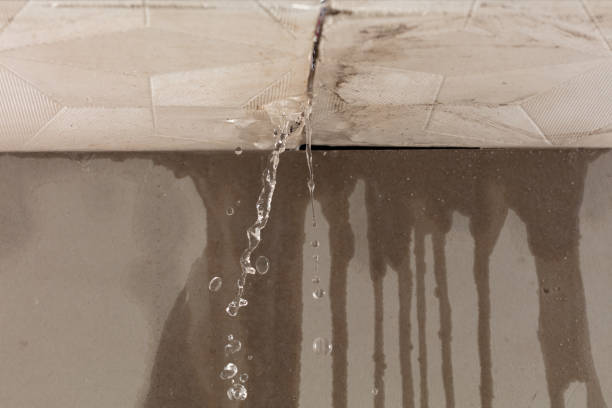
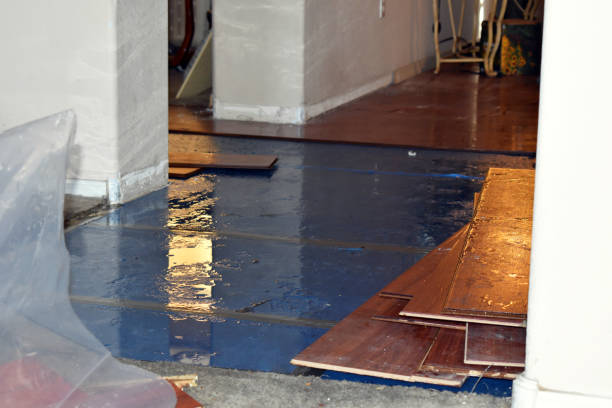
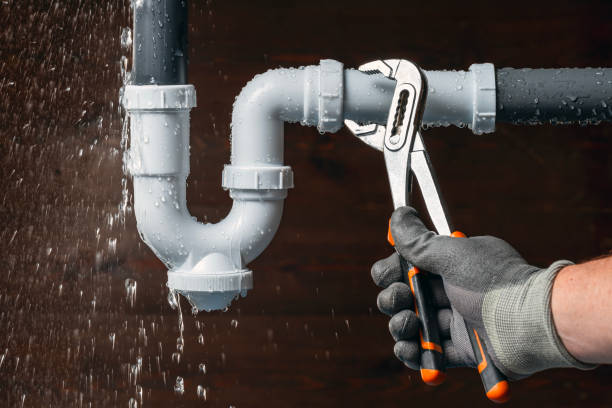
A washing machine hose lets go at 2am and suddenly your Fort Washington laundry room is underwater — that's the exact moment our dispatch line is built for, with a technician routed before you've finished mopping the first puddle.
Call +1-844-578-1604
Crews staged inside Fort Washington limits
Written estimate, no hidden line items
Licensed & insured, verifiable on request

We run our Fort Washington operation on IICRC-certified technicians and commercial-grade equipment, not a subcontractor list we pull from when the phone rings.
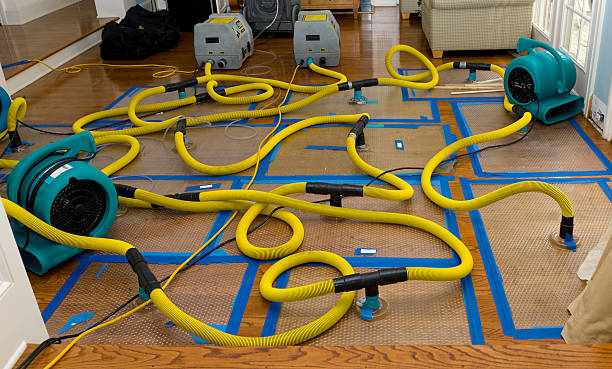
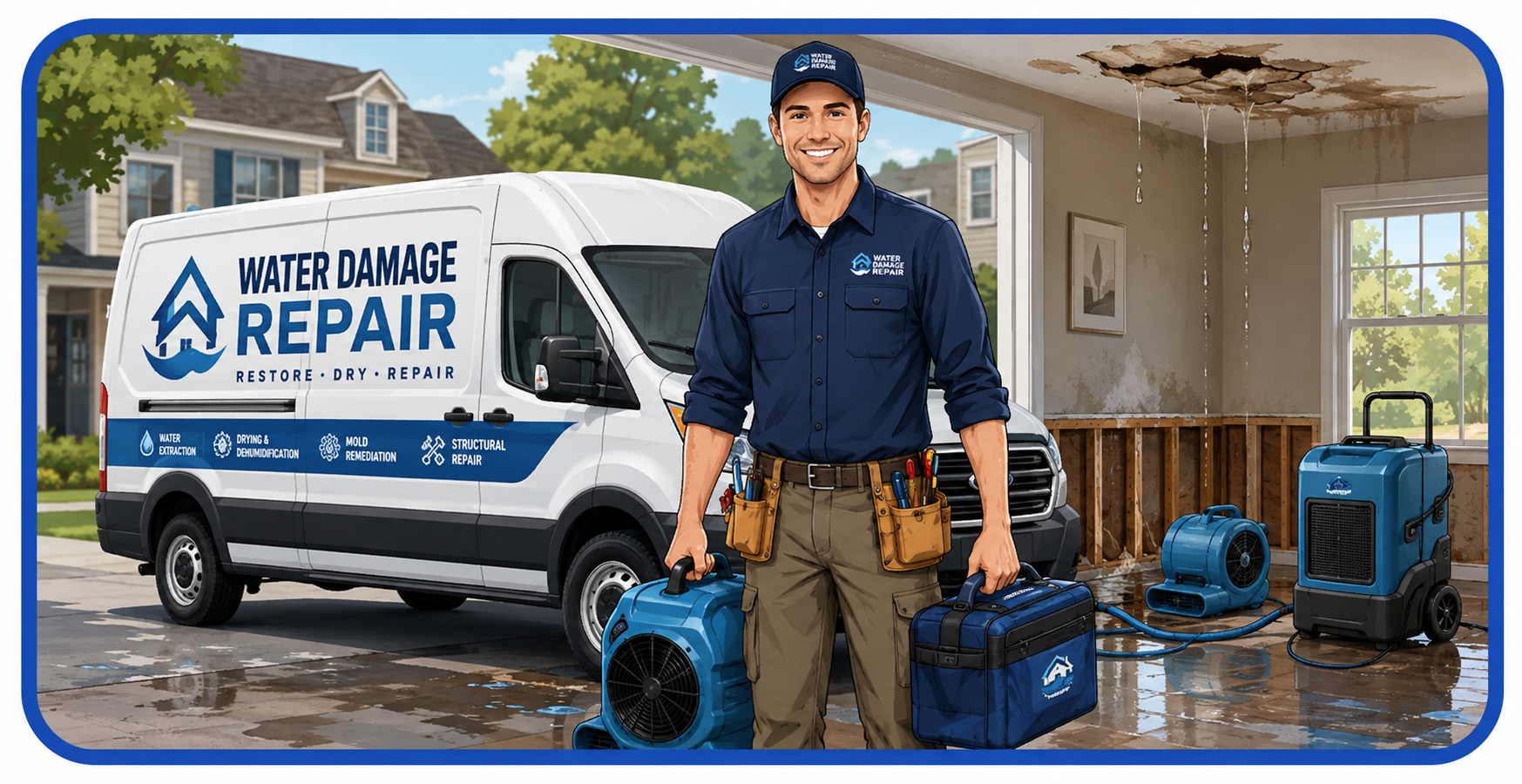
Every Fort Washington truck carries moisture meters, thermal cameras, and both standard and low-grain-refrigerant dehumidifiers, because a one-size drying setup doesn't work for every kind of Fort Washington home.
Ongoing training matters more to us than a certificate on the wall — drying standards and equipment change, and our crews train against the current standard, not the one from five years ago.
Water damage rarely starts as a dramatic flood — it usually starts small, and these are the signs worth acting on before the damage spreads further.
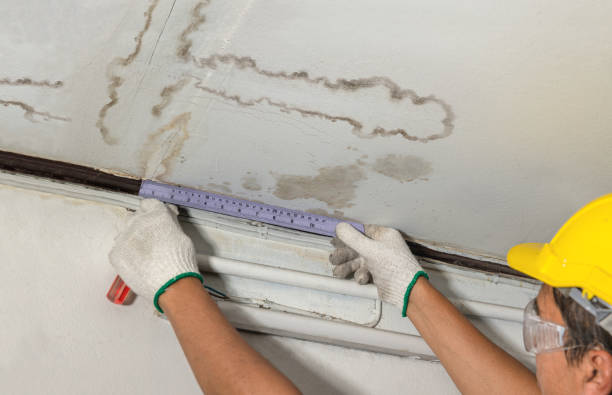
A ring that reappears within weeks of a fresh coat of paint means the moisture source is still active, and it's usually a plumbing line, not a roof issue, especially near bathrooms.
A musty note that wasn't there a season ago usually means microbial growth has started somewhere behind a wall or under flooring, well before you can see anything.
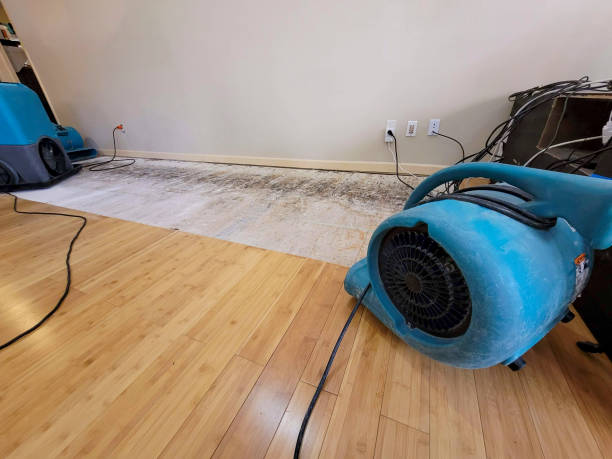
Hardwood cupping at the edges, laminate lifting at the seams, or carpet that stays spongy days after you last noticed water — all three point to moisture sitting against the subfloor.
A sudden increase in usage with no change in household habits is often the earliest sign of a slab leak, well before any visible water shows up.
Wallpaper that suddenly lifts at the seams after holding fine for years often signals a change in the humidity or moisture level inside that wall cavity.
Dark spotting around grout lines or window frames is frequently the first visible sign of a developing moisture problem.
If more than one of these sounds familiar, it's worth a professional moisture check sooner rather than later.
We don't split Structural Drying into separate vendors for extraction, drying, and repair — one crew stays accountable for the whole job, from the first wet-vac pass to the final coat of paint.
The equipment on our trucks scales up or down to the job, but the process — assess, extract, dry, verify, repair — doesn't change.
The first hour after a water loss decides how much of the structure is salvageable, which is why extraction is always the first truck-mount job, not an afterthought behind paperwork.
Air movers and dehumidifiers get placed according to psychrometric readings taken at assessment, not a default layout used on every job regardless of conditions.
Our sewage cleanup protocol follows IICRC S500 guidelines start to finish, including isolation of the affected zone and disposal documentation.
We treat the 48-hour mold window as a deadline for our own drying timeline, not a talking point.
Once moisture readings confirm the structure is dry, the same team that documented and dried the loss hands off directly into drywall, insulation, and flooring repair.
Furniture, electronics, and documents get assessed on-site, with salvageable items cleaned and stored while the space dries.


This is the same sequence every job follows, whether it's a single flooded room or a full commercial loss.
Real person, real questions, fast routing — the goal is getting a truck moving within minutes of hanging up.
Moisture meters and thermal cameras trace exactly how far water has traveled, including inside walls and under flooring where it's invisible to the eye.
Standing water comes out first with commercial extraction equipment, then air movers and dehumidifiers go to work based on the readings just taken.
Moisture readings confirm the structure meets a safe drying standard before we hand over documentation and move into reconstruction.
None of these four things matter in isolation — it's the combination of licensing, speed, honest pricing, and a real guarantee that actually changes the outcome of a water emergency.
Licensing and insurance aren't paperwork we keep in a drawer; they're what let us stand behind the work if something doesn't go as planned.
Shorter drive times matter most in the first hour after a loss, which is exactly when local staging pays off.
We'd rather have the pricing conversation upfront than after the job's already underway.
Every job closes with a documented re-inspection, not a handshake and an invoice.
We'd rather run a dehumidifier an extra day on our dime than sign off on a reading we're not confident in.
Technicians aren't rewarded for closing jobs quickly, which keeps the incentive pointed at actually finishing the drying right.
Call +1-844-578-1604Aqua Guard Water Damage routes crews across Fort Washington and its surrounding zip codes, including 19034, so response times hold steady no matter which side of town the call comes from.
Coverage extends past the city core into the surrounding Fort Washington suburbs, so an outlying address isn't treated as a second-tier call.

"Our water heater gave out overnight and by the time I found the pool of water it had already crept under the cabinets. The crew here in Fort Washington had it extracted and drying equipment running before I finished my coffee."
Renee A., Fort Washington"They found mold starting behind our baseboards before it spread and handled containment properly instead of painting over it like a previous company tried."
Owen D., Fort Washington"They didn't cut corners on the sanitization step even though it clearly slowed them down — with two kids in the house, that mattered to us."
Fatima J., Fort Washington"Every cost question got a straight answer, even the awkward ones, which is more than I can say for the last two contractors I dealt with."
Lucas P., Fort Washington"Getting a daily drying log meant we always knew where the job stood instead of a vague verbal update."
Grace T., Fort Washington"Our office flooded overnight and industrial equipment was already running before our staff arrived for the morning shift."
Nathaniel W., Fort Washington"The technician explained exactly which boards needed to go and which tested dry enough to keep, so we didn't overpay for the repair."
Bianca H., Fort Washington"Storm runoff got into our crawl space and the smell alone told us something was wrong. They found a failed vapor barrier and fixed the actual cause during the same visit."
Derek S., Fort Washington"They found the actual source of the leak instead of just drying the surface damage, which saved us from the same problem happening again in a month."
Melissa C., Fort Washington"Being out of town when it happened was stressful enough — having a crew that could work directly with our property manager made it manageable."
Victor N., Fort Washington